Electrochemical Anodization, Porous Silicon
The porous silicon is fabricated by the electrochemical anodization of silicon in a hydrofluoric acid (HF) based electrolyte. This is the most common method of fabricating porous silicon though the use of an ammonium fluoride based electrolyte has also been reported. The fabrication is usually conducted in the dark to prevent photogenerated currents contributing to the formation process.
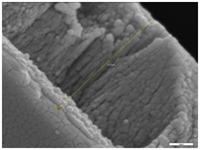
Porous silicon is composed of a silicon skeleton permeated by a network of pores. It is possible to define the characteristics of a particular porous silicon layer in a number of ways. The methods of identification include the average pore and silicon branch widths, porosity, pore and branch orientation, and layer thickness. The specific nature of a layer depends upon the fabrication conditions used, including the substrate doping and type, the hydrofluoric acid (HF) concentration and the acidity(pH value) of the electrolyte, the anodization current density and anodization time. The techniques used to assess these properties include various microscopy techniques (pore diameter, microstructure and layer thickness), gravimetric analysis (porosity and layer thickness) and gas adsorption isotherms (pore diameter).
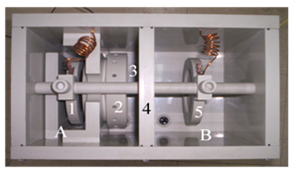
1. Nickel Foil (Cathode)
2. Threaded Catch Mechanism
3. Wafer Holder Seat
4. Separation Plate
5. Platinum Mesh (Anode)
Α. Solution Tank HF:CH3CH2OH:H2O (1:1:2)
B. Solution Tank NaCl (0.4 Μ)
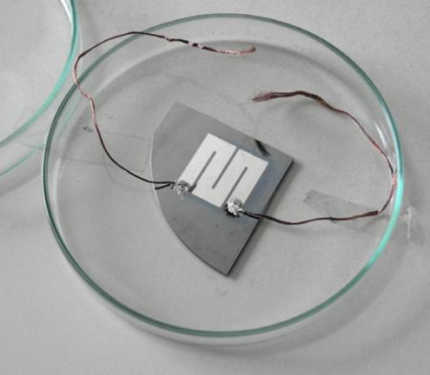
A thermoacoustic device which is composed of a patterned, thin aluminium film and a porous silicon layer on p-type silicon wafer. The fabrication procedure begins with the formation of a porous layer with thickness of 10 μm and 78% porosity on a silicon wafer. The patterned, thin aluminum film (30nm thickness) on top of the porous silicon layer is deposited by thermal vacuum evaporation of 99.999% pure aluminum wire using an appropriate evaporation mask.